Open Today Sales: 9 AM-6 PMOpen Today Service: 7 AM-6 PM
Sixty miles each way on I-20 and I-59 adds up to real money. Here is the honest version of what the 2026 Camry returns on that drive, including the number most pages leave out.
Every page about this car leads with 51 mpg. That is the combined rating on an LE with front-wheel drive, and combined is a blend of city and highway. The two halves are 52 city and 49 highway.
A 60-mile run up I-20 at 70 mph is not a blended drive. It is close to a pure highway cycle, so the number to plan around is 49, not 51. We would rather tell you that now than have you check the trip computer after a week and feel misled.
Here is why it still matters: 49 mpg highway is a remarkable figure for a midsize sedan. A conventional gas competitor in this class is generally somewhere in the mid-30s on the highway. Over 600 weekly miles that difference is not a rounding error.
You can confirm the ratings yourself at fueleconomy.gov, the EPA's own database.
Back to topThe Tuscaloosa to Birmingham commute is mostly open interstate, which is the easy part. The parts that wear on a car and a driver are at the ends. Getting onto I-359 and out of town in the morning, then the merge and the exits once Birmingham traffic thickens up past Bessemer.
Those bookends are where the hybrid system goes back to work. On open highway the gas engine does most of the driving and the efficiency gap against a conventional car narrows. In the stop-and-go at either end, the electric side takes over again and the gap reopens. The blended reality of this commute is why the combined figure is not useless, just optimistic.
Plenty of people reading this are not going all the way to Birmingham. The Mercedes-Benz plant at Vance sits roughly halfway, which cuts the daily distance about in half and changes the math.
At 30 miles each way you are still putting on serious annual mileage, but the fuel difference between trims matters less in absolute dollars. That opens the door to buying the trim you actually want to sit in rather than the most efficient one, which is a conversation we have on the lot most weeks.
At 30 miles each way, the XLE stops being an indulgence. You give up about five mpg against the LE and get leather, a softer ride and ventilated seats for the drive.
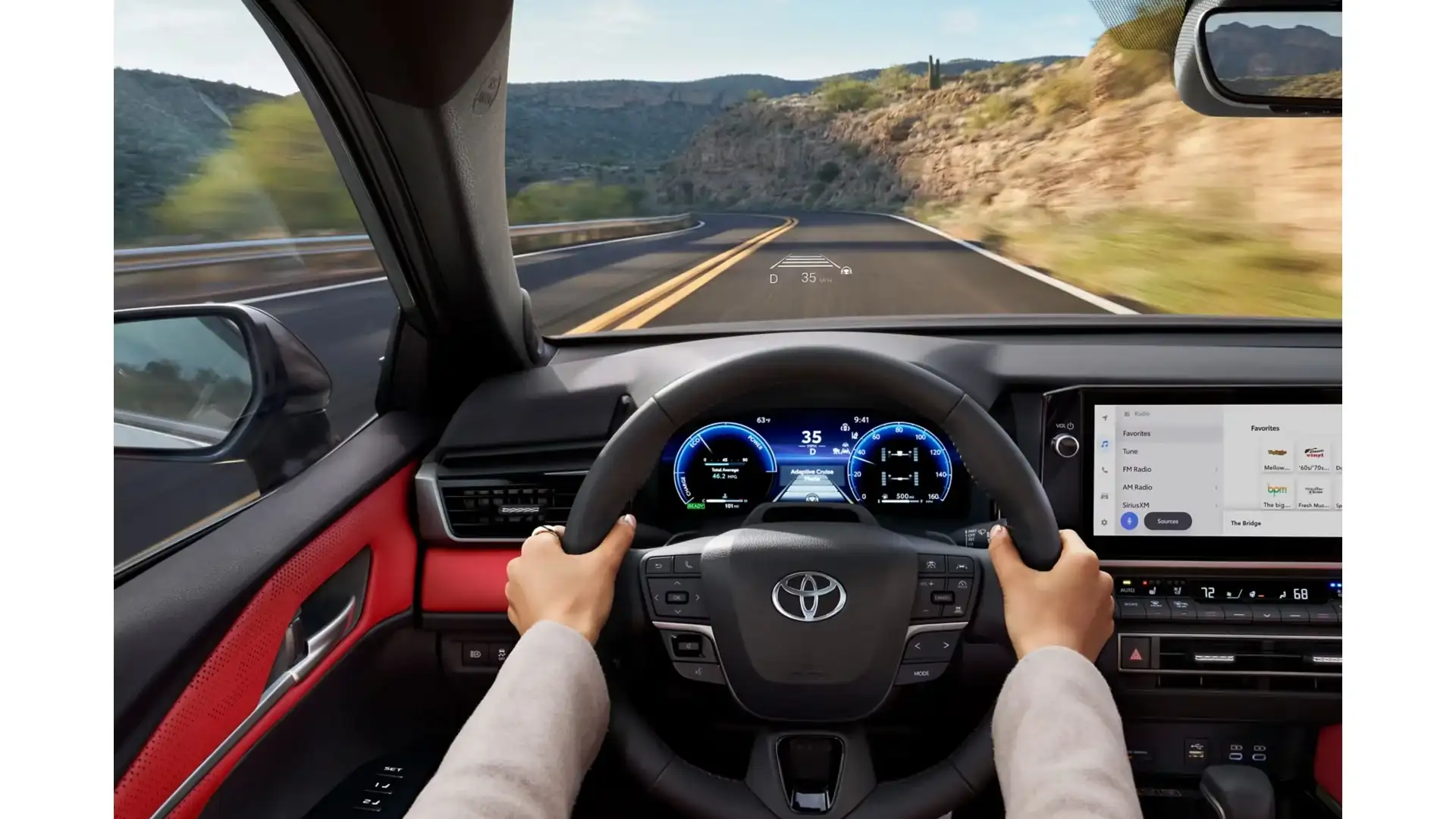
If you are in the car two hours a day, five days a week, the seat and the cruise control matter as much as the fuel gauge. Full-speed Dynamic Radar Cruise Control is part of Toyota Safety Sense 3.0 and standard on every trim, including the LE. It holds a gap to the car ahead and takes most of the work out of the Bessemer stack-up.
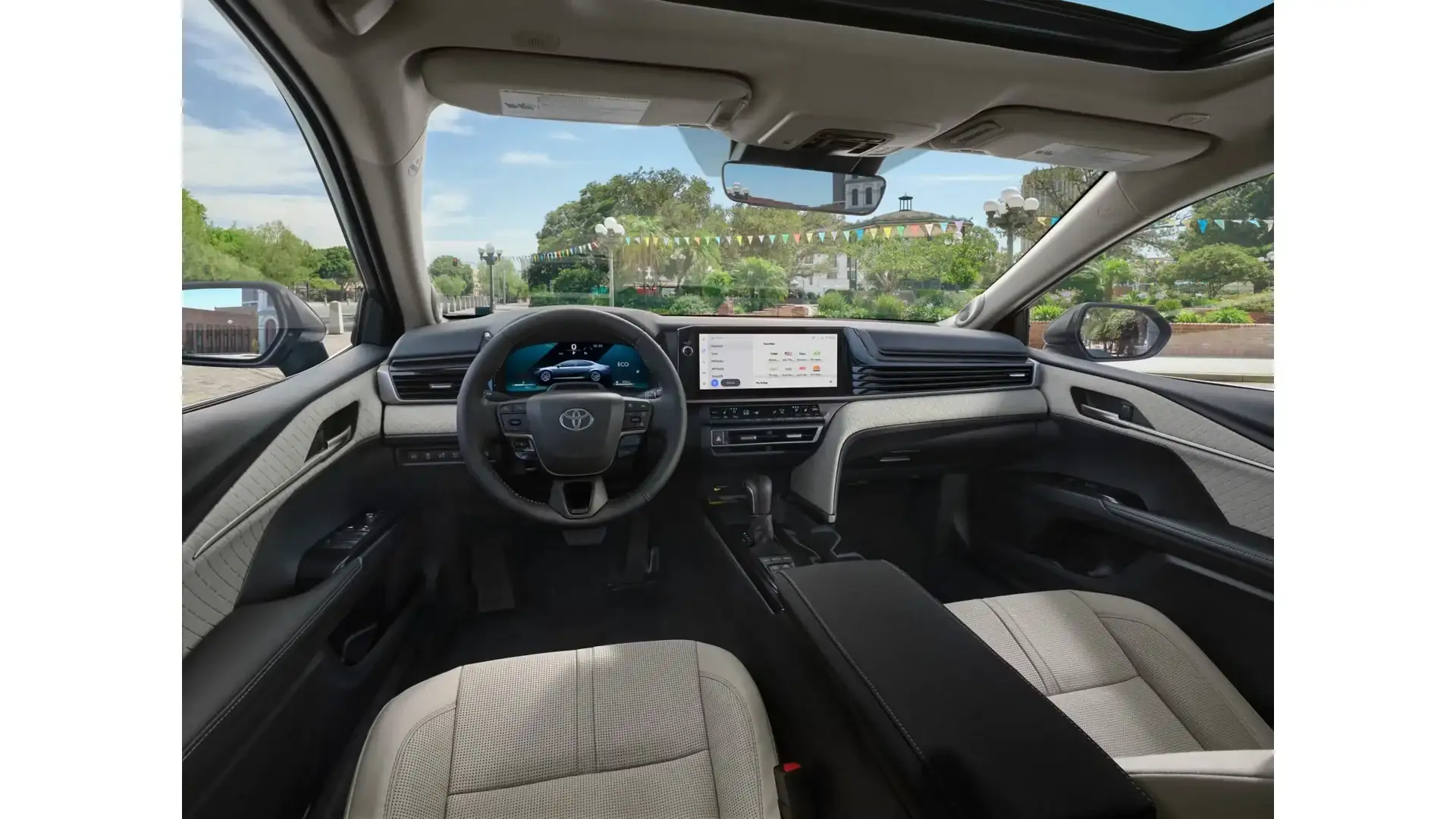
The 12.3-inch touchscreen is standard on XLE and XSE and optional on SE and Nightshade. On an hour-long drive, having the map and the audio visible at the same time is a bigger quality-of-life change than the screen size suggests.
Ventilated front seats are XLE standard. On an August afternoon leaving a Birmingham parking deck, that is the feature people talk about after the fact.
Back to topIf the fuel number is the whole reason you are here, buy the LE. Nothing else in the lineup comes close, and the safety kit you actually want on I-20 is already standard on it.
If you are covering the shorter Vance run, or you simply do not want to spend a decade of hours in the base trim, the XLE is the honest upgrade. The full lineup, trim by trim, is on our 2026 Camry model page, and the Toyota hybrid FAQ hub answers the battery and maintenance questions.
Back to top| Trim | Starting MSRP (FWD) | MPG Hwy / Combined (EPA est.) | Verdict for a 60-mile commute |
|---|---|---|---|
| LE | $29,000 | 49 / 51 | The commuter's answer. Highest highway rating in the lineup, standard adaptive cruise. |
| SE | $31,300 | 45 / 46 | Firmer ride. Fine for an hour, but you pay about four mpg for the sport suspension. |
| Nightshade | $32,300 | 45 / 46 | Same as SE underneath. Buy it for the look, not for this drive. |
| XLE | $34,000 | 45 / 46 | The comfortable choice. Softer ride, ventilated seats, bigger screen standard. |
| XSE | $35,200 | 43 / 44 | Least efficient of the five. Buy it because you want it, not for the commute. |
Prices shown are Manufacturer's Suggested Retail Price (MSRP), front-wheel drive, and exclude tax, title, license, registration, destination and dealer documentation fees. Fuel economy figures are EPA estimates and will vary with driving habits and conditions. Inventory changes weekly, so call to confirm which trims are in stock.
The LE with front-wheel drive is EPA-rated at 49 mpg highway and 52 city, which averages to 51 mpg combined. A steady 70 mph run up I-20 leans on the highway number, so 49 is the figure to plan around rather than 51. That is still an unusually high highway rating for a midsize sedan.
Roughly 60 miles each way on I-20 and I-59, or about an hour door to door outside of rush hour. Drivers heading to the Mercedes-Benz plant at Vance cut that roughly in half. Either way it is a serious weekly mileage number, which is why the fuel figure matters more here than it does across town.
Yes, but for a different reason than the city case. On the interstate the hybrid advantage narrows, because a gas engine is efficient at a steady cruise. The Camry still returns 49 mpg highway, and the parts of the commute that are not steady, the Arkadelphia Road backup and the downtown Birmingham exits, are where it pulls ahead again.
The LE, on fuel economy alone. It is the only trim rated up to 51 mpg combined, and at 60 miles each way that gap against the XSE's 43 adds up fast. If you want more comfort for the hour, the XLE is the sensible upgrade and gives up about five mpg.
Yes. Full-speed range Dynamic Radar Cruise Control is part of Toyota Safety Sense 3.0, which is standard on every trim including the LE. It holds a set gap to the car ahead, which is the feature that makes an hour on I-20 tolerable rather than tiring.
AWD is available on all five trims for about $1,525 and costs roughly one mpg. On a long interstate commute the case is weaker than it is around town, since you are mostly on open highway. The exception is the spring storm season, when the I-20 and I-59 split gets genuinely slick in heavy rain.
That depends on your exact route and driving, and we will not pretend to a precise number. What we can say is that a 49 mpg highway rating on a 60-mile each-way commute means noticeably fewer stops than a conventional midsize sedan in the low 30s. Fuel economy figures are EPA estimates and your mileage will vary.
Take one up I-20 and back. An hour in the seat answers more than any spec sheet.
Tuscaloosa Toyota | 3325 Skyland Blvd E, Tuscaloosa, AL 35405